
Gulf County VINE Coverage
VINELink opens the door to VINE, which stands for Victim Information and Notification Everyday. Gulf County has real ties to the system. Local victim materials and an older Star arrest report both point to the Gulf County Detention Facility feeding data into Florida VINE. So after a Gulf County arrest, it works well for checking whether one named person is in custody.
VINE has limits, though. It is not an arrest report, court docket, or photo archive. For booking details, the GCSO Arrests feed can list a name, arrest date, originating agency, and a photo that comes down quickly. For current custody questions, the detention facility answers directly. VINELink simply adds status checks and confidential notices, starting from the official VINELink landing screen and its participating-state workflow.
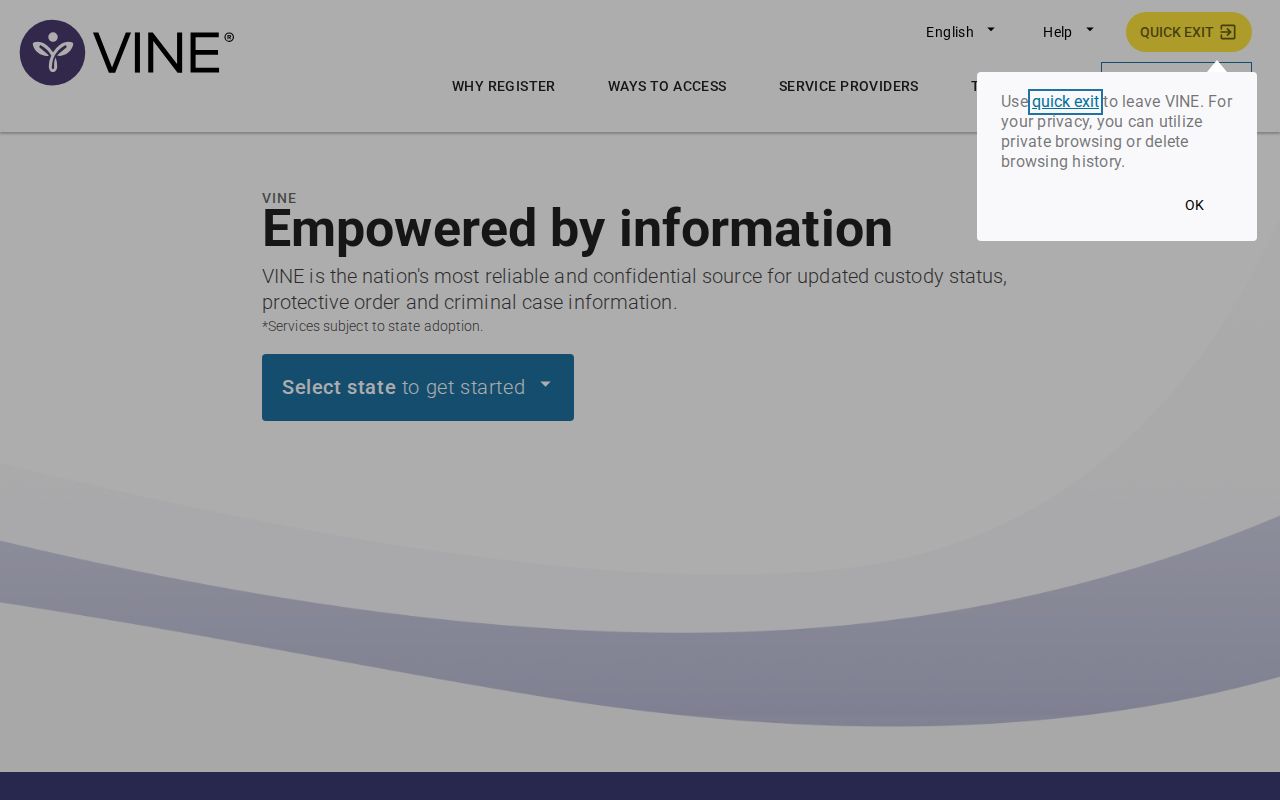
Select Florida before searching for a Gulf County record.
Check a Gulf County Arrest
Begin with the most exact facts you have. Common names can return several candidates, and a similar name alone proves nothing about identity.
- Open VINELink and choose Florida.
- Select person search and, if asked, the relevant county or facility.
- Enter the legal name or a known offender or booking identifier.
- Compare every available identifier and the listed facility.
- For a fresh event, compare Gulf County 24 Hour Arrests and call the jail when immediate confirmation matters.
An empty result does not mean no arrest occurred. The record may lag. Spelling can vary, or another custody system may hold the person. County arrest posts also run days behind the stated arrest date, so neither channel gives an instant view.
What Florida VINE Shows
Displayed fields depend on the agency. Read each result as custody data, not the whole criminal case.
| Item | Meaning |
|---|---|
| Name and identifier | Facts to compare before accepting a match. |
| Custody status | The status most recently sent by the facility. |
| Facility | The participating location tied to the record. |
| Notification option | Registration when alerts are offered. |
For case events after booking, search the Gulf County CiviTek portal. The Florida person-search screen connects lookup and registration.
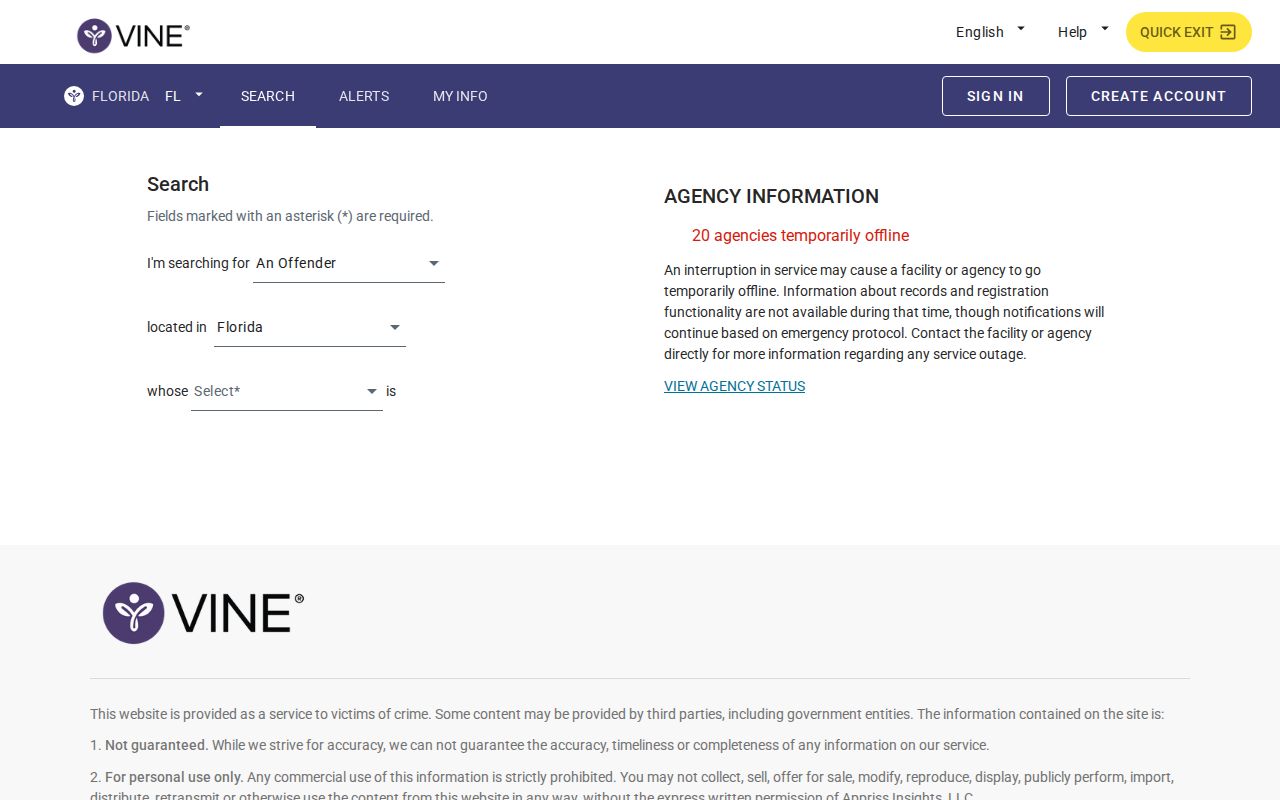
Return through the official home page if a saved session link expires.
Register for Gulf Custody Alerts
Registration usually offers phone, text, email, or app notice. Pick channels only you control. Florida instructions require a four-digit PIN for phone registration, so guard it, since the PIN manages or stops notices.
- Open the verified record and choose notifications.
- Select offered changes, such as release or transfer.
- Enter the requested contact information.
- Create and save the four-digit PIN.
- Complete confirmation and retain the registration details.
Automated calls may keep repeating for 24 to 48 hours until the PIN is entered. Skip the switchboard. Alerts are free, though carrier rates may apply.
Why Gulf Records Reach VINE
Why does Gulf County data reach VINE? A Gulf victim-services guide lists the service. A historical Star of Gulf County arrest-report notice also credits Florida VINELink with Gulf County Detention Facility data, including GCSO and Port St. Joe Police Department entries. That documents a past data link. It does not turn the newspaper into a live roster.
Each county system has its own job. The Sheriff app advertises inmate search as well. GCSO posts selected recent arrests, the jail confirms custody, VINE handles status and alerts, and the Clerk keeps the later court trail.
VINELink Limits and Confirmation
VINE waits on facility transmissions. A booking, release, or transfer can appear late, and spelling errors cause misses too. A single notice is not a safety plan. Call 911 in an emergency.
Confirm urgent custody questions directly. Call Gulf County Detention Facility at (850) 227-1124. VINELink cannot promise real-time notice.
Federal custody runs on separate systems. Use the BOP locator for federal prison and the ICE locator for immigration holds. After a transfer or sentence, use the Florida DOC Offender Search. None is a Gulf County booking feed.
Other Gulf Alert Paths
Tie each registration to the right custody layer. County detention, Florida state corrections, federal prison, and immigration detention keep separate alert records. Save the source, date, facility name, and confirmation details. That way a later change can be checked against the same official system. Keep the PIN away from shared files and public notes.
The Gulf County Sheriff's Office app is a separate local tool. Current descriptions advertise inmate search, news, tips, and sex-offender search, while an earlier agency release described recent arrests and push notices. Vendor screens change, so verify the publisher through the Sheriff's share page.
Florida DOC runs its own victim-notification process for state corrections cases. Use it once a case moves into state custody. County jail alerts stay with VINE and the Gulf facility. For the underlying record, consult Gulf County recent-arrest resources.
Gulf Custody Status Sequence
An arrest in Gulf County can pass through several record states. A GCSO post is publication-based, not a live cell-status table. Its visible fields stop at name, arrest date, charge language, warrant-service wording when present, originating agency when supplied, and a photograph. Booking time is not promised. Nor are booking number, bond, release method, court number, or current custody.
For current county custody, start with the Sheriff's app. It advertises inmate search. The detention facility remains the direct fallback. VINELink can show the status a participating facility last sent and will accept an alert registration. After transfer into a Florida state sentence, Florida DOC becomes the right source downstream, and a county booking may never belong there if the person stays local or walks free.
Court records answer a different question. CiviTek permits anonymous public court access. Check it for later filings and disposition; a VINELink release notice says nothing about whether a charge was dismissed or sustained.
When a Gulf Search Fails
Start by separating an arrest date from a publication timestamp. Gulf posts often lag. Sampled ones carried arrest dates two to six days before their page timestamps. That gap is an observation, not a schedule. A same-day VINELink search and a same-day GCSO search can both come up blank even when an intake later appears. So check again, use the official app, and call the facility when the answer cannot wait.
Also separate release from disappearance. Someone may leave custody while an arrest post is still in its display window, and another person's photo may expire while the booking record itself is retained. Neither screen state gives a court disposition; that final history sits with the Gulf County Clerk and must be matched by identity.
Repeat a blank search with verified spelling and a known identifier. The county feed can omit a fresh event. It can also display one after a delay. A person can sit in jail without appearing in the roughly two-week photo window. Write down the time of each check. An empty result is not a fact.
If sources disagree, call the detention facility. The GCSO Records Custodian sits at 418 Cecil G. Costin Sr. Blvd., Port St. Joe, telephone (850) 227-1115, fax (850) 227-2097. A targeted request can seek the booking number, the complete booking record, the affidavit, bond or release information, and a public case number for a named person and date.
Protected information may be redacted. Ask the custodian to name the exemption and produce the public remainder. Never use VINELink to guess at confidential facts.
The two-week photo display rule explains why a VINE result and an arrest post can drift apart over time. Removal proves no release, dismissal, or expungement. A custody result promises nothing about an image staying online either. The systems hold separate data for separate purposes.
For an older event, request the booking series rather than treating VINE as an archive. Florida's GS2 schedule describes booking records plus commitment and release lists that may carry booking number, charge, court, bond, release method, and return date. What you get depends on the custodian's holdings and the exemptions that apply. Jail docket books are a separate permanent series, though that still does not make each photo a permanent web item.
Public Record Search
Sponsored Results