
Gulf County Recent Arrest Windows
The GCSO Arrests feed is the first stop for new Gulf County bookings. It offers a text search. It links to short arrest posts. Each post may carry a name, an arrest date, a charge, a photo, and the agency that made the arrest. It is not a full jail roster. Booking time, bond, release details, a case number, and the final outcome generally stay off the feed. Photos remain on display for roughly two weeks. That window controls only what the public sees, not how long the booking record itself survives. No feed covers only the last calendar day. The county publishes no complete weekly blotter either. The channels overlap, and those gaps matter most when a post runs late or a photo rolls off before you find it.
| Time window | Best starting source | What Gulf users should know |
|---|---|---|
| Same day | GCSO feed, sheriff app, jail call | No guaranteed 24-hour list; sampled posts lagged arrest dates. |
| Several days | GCSO feed and VINE | The photo display lasts about two weeks, while custody can change sooner. |
| Multi-day news | The Star and WJHG | Coverage is selected by editors and is not every booking. |
| Older events | Clerk, records request, archives | Primary records can remain after a web post disappears. |
For same-day results, the focused 24 Hour Arrests page covers the fallback options. The wider window belongs to the Arrest Log, which tracks news and archives. News archives stretch further back.
Arrested Last Night in Gulf County
Morning-after searches often bring mixed results. Start with the GCSO Arrests feed. Then check the sheriff app's inmate search. A name that still shows nothing may simply mean the arrest has not been posted yet. Other explanations exist too. A different agency may have made the arrest, the record may be withheld, or the person may already be out of county custody. Calling the Gulf County Detention Facility at (850) 227-1124 settles the custody question fastest. That call beats guessing.
Florida VINE works better than refreshing a photo page. It tracks custody status and sends notifications once a facility transmits its data. The dedicated VINELink Check page walks through registration and its limits.
Searching Gulf County Arrest Custody
Gulf County posts no field-rich inmate table. Instead, the work splits across the short-lived GCSO photo feed, the sheriff app, a jail phone line, and VINE. The web feed takes free text. It does not offer labeled filters for name, date, or booking number. The app advertises an inmate search. Its vendor interface can change without notice. These channels overlap, but each answers a different piece of the custody question rather than replacing the others.
| Field or question | Public path | Limit |
|---|---|---|
| Name | GCSO feed search | Common names need identity checks. |
| Arrest date and charge | Individual GCSO post | The charge is an charge. |
| Current custody | Sheriff app, VINE, jail call | Data can lag a new booking or release. |
| Bond or release | Jail or court record | Not shown on the reviewed feed. |
| Booking number | Records custodian | Not observed on public GCSO posts. |
Use a short sequence rather than relying on one result:
- Search the official GCSO Arrests page by the person's correctly spelled name.
- Compare the arrest date and stated agency, and do not treat the post time as booking time.
- Check the official app or VINE when the question is whether the person remains in custody.
- Call the detention facility or request the booking record for details the public feed omits.
The Gulf County Detention Facility page lists its administrators and posts operational notices. It also mentions ongoing renovations. Renovations can change access routines, so rely on the live page rather than an old one. The official GCSO search screen stays bare. No photo gallery hangs from it.
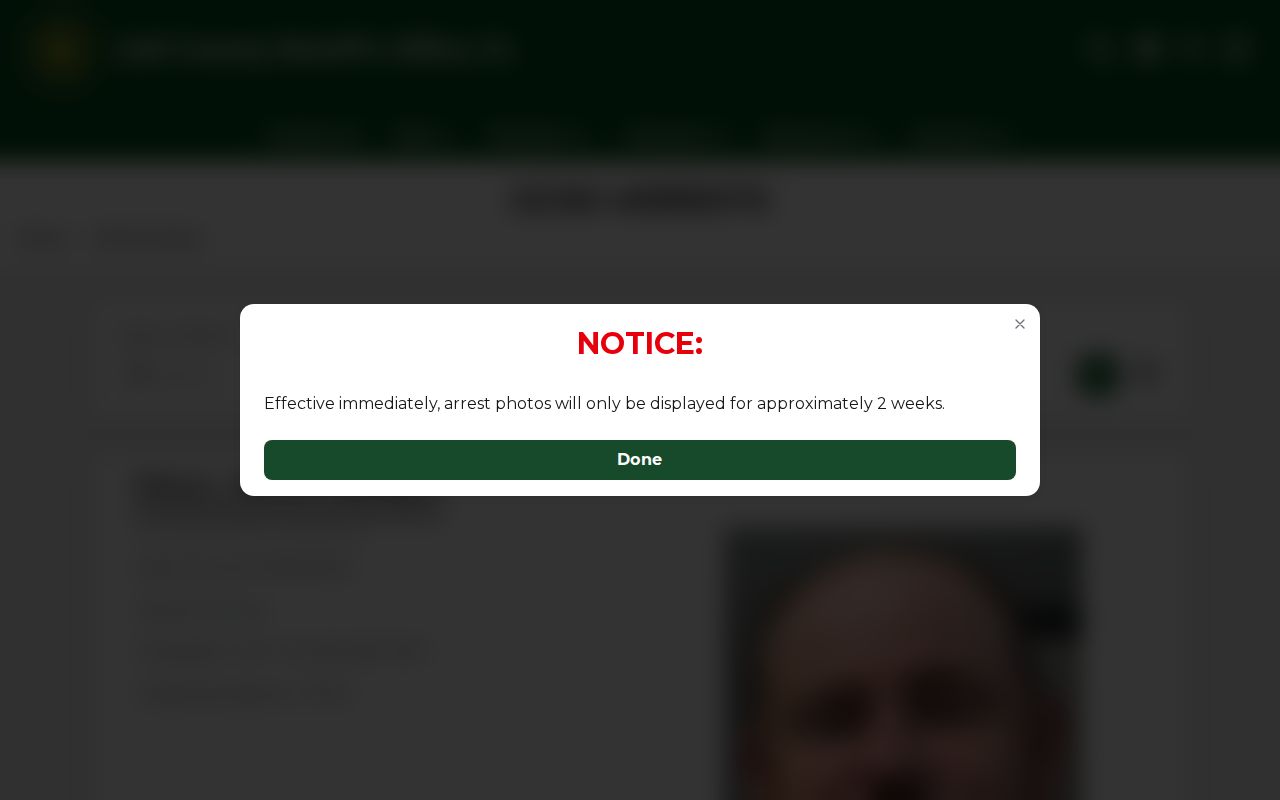
The page shows why the search term and the two-week photo notice work together.
Where Gulf County Arrests Appear
Official sources each answer a different question. The sheriff feed documents selected recent posts, the app advertises inmate search, VINE tracks status, and the Clerk carries the court trail. Local news adds narrative context. One independent index keeps a Gulf page too. Treat it as a follower, since its count and update date can drift from the official channels.
| Channel | Photo | Status | Best use |
|---|---|---|---|
| GCSO Arrests | Often | Official | Recent sheriff-published arrest post |
| GCSO app | Feature dependent | Official app | Inmate search, news, tips, alerts |
| Florida VINE | Not a photo archive | Government-supported | Custody status and notifications |
| Gulf Clerk/CiviTek | No booking gallery | Official court path | Filed case events and disposition |
| The Star or WJHG | Sometimes | Independent news | Selected stories and historical reports |
| RecentlyBooked Gulf | Often claimed | Unofficial | Lead only; verify every fact officially |
The official GCSO app listing spells out its features.
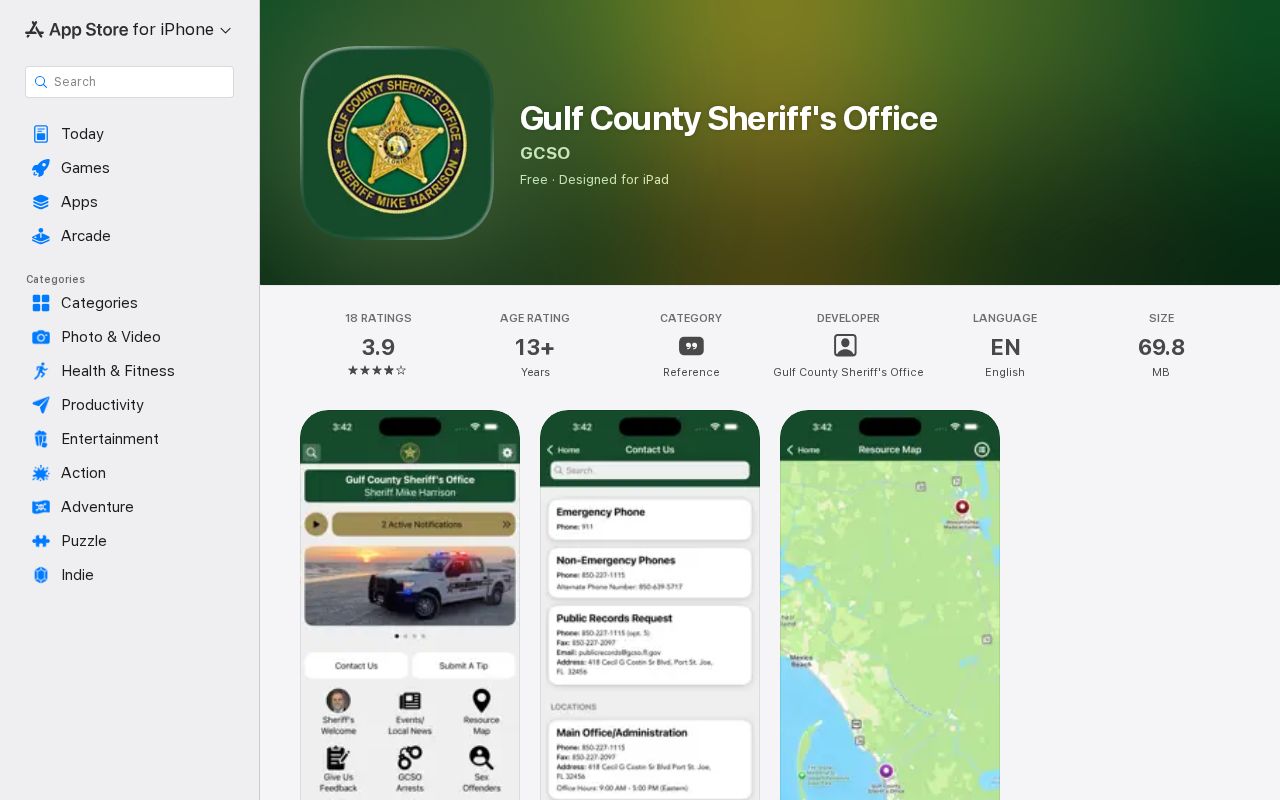
The app is official, but confirm its publisher and current features.
Gulf County Arrests by City
Gulf County contains just two incorporated cities. Both funnel into the same county-centered booking system. Port St. Joe runs its own police department, yet its public-safety page offers no daily arrest roster. The city department creates the incident or arrest report, while the county detention system holds the booking and custody record. Those are different jobs. The Port St. Joe Recent Arrests page explains that split.
Wewahitchka is different. Its published city material documents sheriff-provided daily law-enforcement protection rather than a separate booking feed. A city request form and the GCSO channels serve different record needs. The Wewahitchka Recent Arrests page follows that local route.
Inside a Gulf County Arrest Record
A visible GCSO post is only a sliver of the booking record. Booking is the jail's process after an arrest. Florida's GS2 records schedule describes the pieces: an intake form, a booking card, an arrest affidavit, and release-on-recognizance papers. Those are record-series descriptions. They do not promise that every field is public in every case. Protected details get withheld. Victim, juvenile, medical, and investigative information may be redacted.
| Field | What it can show |
|---|---|
| Name and identifying details | Who the agency associated with the booking; confirm identity carefully. |
| Arrest date and time | When the arrest or intake occurred, distinct from a website post time. |
| Booking number | The jail's event identifier, not shown on the reviewed public feed. |
| Charge | The charge recorded at booking, not the court result. |
| Bond and release | Terms, method, or date if maintained and releasable. |
| Booking photograph | An intake image where created and not exempt. |
| Case number | A bridge to the Clerk's court docket when one has been filed. |
A commitment and release list can carry a booking number, name, charge, court, bond, release method, and return date. Each field narrows a search. So name the record. Give the date range. A tightly framed request lets the custodian locate responsive Gulf County arrest material and explain any exemption rather than guess from a short web post.
Gulf County Mugshots After Arrest
GCSO arrest posts sometimes include a photograph. The feed itself says arrest photos stay up for about two weeks. That window is narrow. It does not turn the page into a permanent Gulf County mugshot archive, nor does it show whether a person remains in custody. Once a photo drops off, ask the GCSO Records Custodian whether a releasable booking photograph survives in the retained record. The office publishes no photo-copy price or turnaround. Assume neither.
A person sentenced into Florida state custody belongs in the Florida Department of Corrections Offender Search, separate from the county jail channel. That database can carry an offender photograph. It answers state custody, not a fresh Gulf County booking. Someone merely awaiting court will not appear there. Third-party sites sit further out. RecentlyBooked and Arrests.org keep independent Gulf pages or archives, though entries can be stale, incomplete, or copied. Mugshots.zone, Mugshots.com, and Busted Newspaper publish no repeatable Gulf-local page. Treat them as non-Gulf sources. The Florida DOC search landing page frames its database squarely around state custody.
It separates state-prison photos from fresh county booking images.
Request Gulf County Arrest Records
Public-record requests go to the Gulf County Sheriff's Office Records Custodian at 418 Cecil G. Costin Sr. Blvd., Port St. Joe, FL 32456. The main number is (850) 227-1115. The listed fax is (850) 227-2097. Florida law lets a custodian charge authorized duplication costs plus a special-service charge when extensive staff or technology work is required. The office publishes no fixed booking-photo fee or promised turnaround. Ask for an estimate before any costly work begins.
- Identify the person, approximate arrest date, and the agency or city involved.
- Ask for the complete releasable booking record, photograph, booking number, bond or release entry, affidavit, and case number needed.
- Send the request to the GCSO Records Custodian, or to the city agency if it created the underlying police report.
- Request a cost estimate and ask that any denied portion be tied to the applicable exemption.
- Use the case number with the Gulf County Clerk to follow later court activity.
Florida law requires no stated reason. Redaction of protected material is still allowed. Note the Sheriff's Office address differs from the detention facility's, so confirm the delivery spot before mailing a request.
Florida Arrest Records and Removal
Florida's public-records law sits in Florida Statutes section 119.07, exemptions and lawful fees included. The GS2 schedule keeps booking records and commitment or release lists through one anniversary year after release, on the schedule's conditions. Jail docket books are permanent. That web photo window is no destruction clock. Older Gulf County arrest material may still sit with the agency, the Clerk, or an archive long after it drops from easy online view.
Who controls the source decides the fix. A wrong official GCSO page should go to the Records Custodian with the exact URL, the name, the arrest date, and the claimed error. For a qualifying commercial booking-photo publisher, section 901.43 sets a no-fee request by registered mail and a ten-calendar-day response rule when its conditions apply. It cannot erase a government record. Nor must a news archive pull a truthful report.
Sealing and expungement run on a separate legal track. The FDLE certificate process begins with a complete eligibility packet, including a certified disposition and fingerprints where required. FDLE lists a $75 nonrefundable application fee. Processing commonly runs about twelve weeks, with no expedite offered. A certificate alone grants nothing. A certified court order must reach FDLE before relief takes hold. Eligibility turns on the case and prior history, so a qualified attorney is the right source of legal advice.
Search engines can lag behind an official source. An old cached result may persist after a page changes, so request a refresh from that engine. RecentlyBooked says its own correction or removal review costs nothing. Arrests.org posts a removal form; confirm it stays linked from the live Gulf page. Skip any service selling removal promises. Florida's statutory route for a qualifying publisher is free. The FDLE process page separates the certificate step from the later court order.
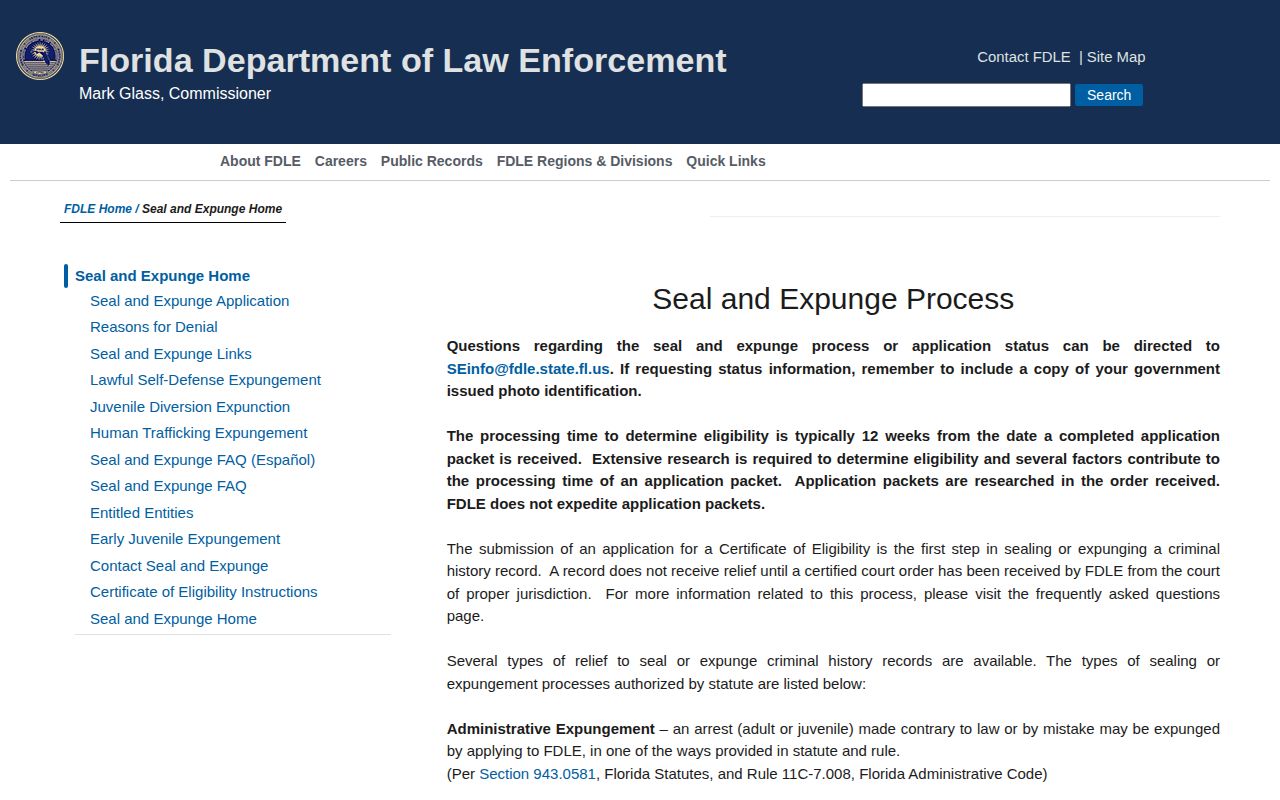
Review of eligibility never seals a record on its own.
Gulf County Arrest Warrants
Gulf County keeps its wanted list thin online. The GCSO Wanted Persons page can sit empty. That says nothing about how many Gulf County warrants are actually active. A GCSO arrest post labeled "Warrant Service" records one arrest. It is not the whole docket of open warrants.
The statewide option is stronger. The FDLE Public Access System takes a surname or exact nickname and narrows by identifying details. A result may list the reporting agency, aliases, the offense, and case or warrant data. It also gives a route for tips. FDLE refreshes the system every 24 hours. The agency cautions it may not be current or complete, so treat any result as a lead. Never approach a wanted person. Confirm any hit with the reporting agency, the Clerk, or an attorney. Send tips to GCSO, or anonymously to Crime Stoppers at (850) 785-TIPS.
The GCSO wanted page simply shows what the office publishes on any given day.
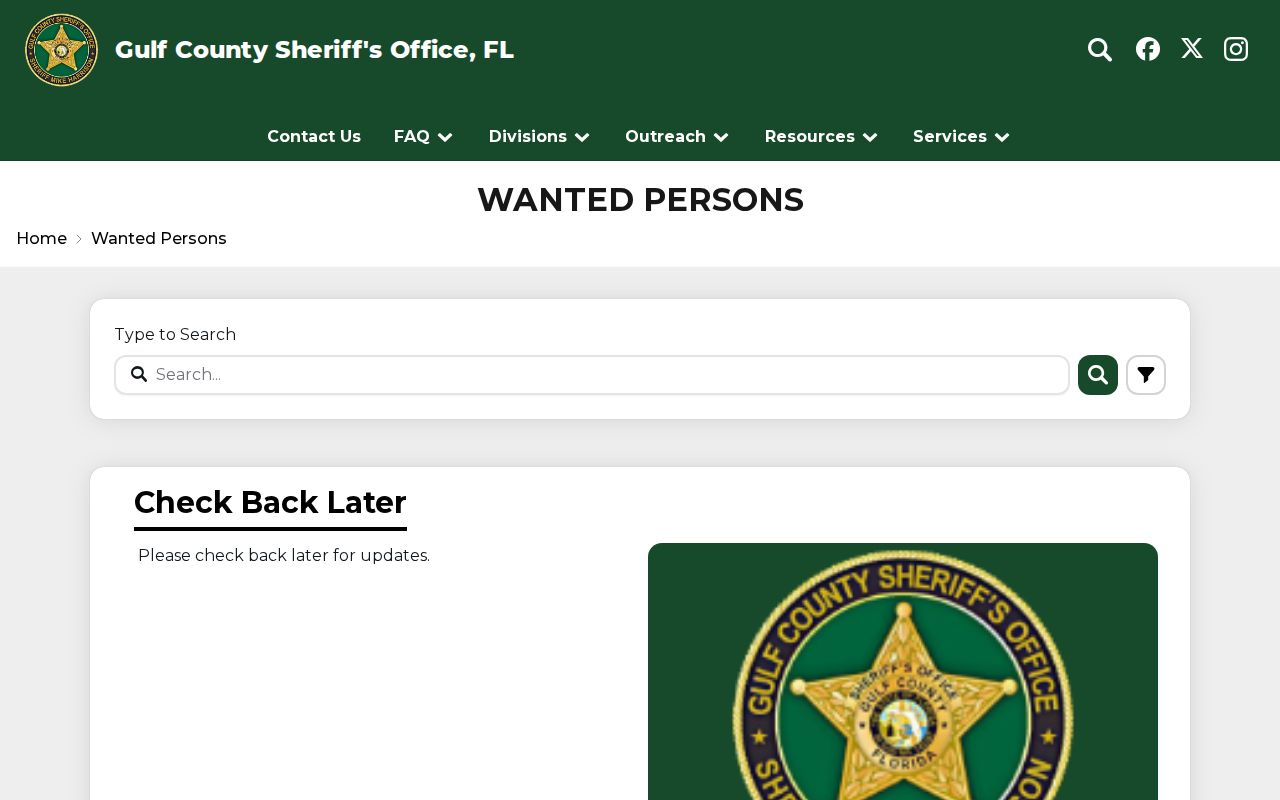
The local page can change at any time, so verify both the live GCSO list and the FDLE statewide search.
Gulf Arrests Reach Court
A first appearance comes fast. It is the early court checkpoint after booking, not the moment a sheriff post goes up. Florida Rule of Criminal Procedure 3.130 generally requires an arrested person to appear before a judicial officer within 24 hours, subject to the rule and the facts of the case. There the court sorts out probable cause, counsel, and conditions of release. The arraignment comes later. That is the hearing where a plea is entered.
The court system splits the work. The Gulf County Clerk criminal-court page explains that circuit court handles felonies while county court handles misdemeanors and criminal traffic. For the documents themselves, the CiviTek Gulf search offers anonymous public access to court files. A docket is not a booking post, though. It can show filed charges, hearings, pleas, dismissals, acquittals, or convictions long after the arrest feed goes quiet, and the disposition is the final recorded outcome.
State and Federal Custody Records
Custody searches depend on which system holds the person. Florida DOC covers state correctional custody and supervision. That includes Gulf Correctional Institution in Wewahitchka. That facility is a state prison. It is not the Gulf County Detention Facility. Someone freshly arrested and awaiting local court action stays in county channels. A sentenced person moved to state custody may show up in the DOC search instead.
Federal custody works separately again. The Federal Bureau of Prisons locator tracks federal prison custody and publishes no inmate photographs. ICE runs its own Online Detainee Locator System for immigration holds. Neither federal tool replaces the GCSO feed, the county jail, or VINE. A federal detainer only asks another agency to hold or notify. It does not prove the person sits in BOP or ICE custody right now.
Gulf Arrest Channels Stay Split
Gulf County has no single screen that merges everything. The arrest post, jail status, booking record, city police report, and court disposition all live apart. GCSO publishes the recent post. The app advertises inmate search, the jail answers custody questions, VINE sends status alerts, and the Clerk keeps the court file. That split is just how the local system is built, not a reason to force conflicting results together. Note the source and check time for every search.
Gulf Arrest Posts Can Lag
GCSO arrest posts can lag behind the arrest date by several days. Delay happens, but no fixed schedule follows from it. The official feed publishes no dependable refresh hour. An entry missing today may appear later, and a photo already deep into its rough two-week window may soon leave public view.
GCSO Arrest App Features
The official app release and current store listing cover a lot of ground. That includes recent arrests, inmate search, push notifications, victim-notification requests, news, tips, and sex-offender research. A vendor built the app, so screens and features can shift. Confirm the official publisher through the GCSO app share page. Social accounts and the GCSO news digest add breaking updates. Neither amounts to a full arrest roster.
Photo Window Versus Arrest Record
The GCSO photo window runs about two weeks, far shorter than Florida record-retention schedules. A booking photo can vanish from the public feed. Meanwhile the booking card, arrest affidavit, release list, or jail docket stays on file with the agency. So a failed photo search answers one question only: is that image visible right now. For an older arrest, request the retained record and check the court docket.
Gulf Arrest Request Costs
GCSO publishes no booking-photo fee table or fixed response deadline. Chapter 119 still allows lawful copy costs. It also permits an extensive-use charge tied to actual labor or technology. Ask for an estimate first. You can also narrow the request to cut the cost. Section 901.43 is different. A removal request to a qualifying commercial booking-photo publisher carries no fee at all.
Gulf Jail Operations Can Change
The county detention page reports ongoing renovations and directs readers to watch the website for updates. Work like that can affect visitor access, phone handling, or other jail routines without touching the public-record rule itself. Check the current county facility page before traveling to 1000 Cecil G. Costin Sr. Blvd. or trusting an older instruction.
Gulf Arrest News Adds Context
News coverage fills in the story a booking line can't tell. The Star crime archive, the WJHG Gulf page, and the GCSO local-news page often explain where an arrest happened, which agencies took part, and what a court later decided. Treat their reporting as background rather than proof. Confirm the booking with GCSO, then check the outcome with the Clerk.