
Gulf County Multi-Day Arrest Log
The Gulf County Sheriff's Office publishes GCSO Arrests as a rolling stream of posts. It is not a dated weekly blotter. Photos stay up for roughly two weeks. The page itself says so. That two-week window is the clearest official guideline. But it promises neither that every arrest appears nor that posts land in date order.
Detail records have shown late-August arrest dates posted in early September. The lag runs about two to six days. So work backward from the arrest date printed on each record. The website timestamp tells you when the post went up. It does not say when booking wrapped. A missing day might mean processing lag or a protected record. It could reflect an arrest by another agency, or a post the office simply never added to the public feed.
Read Gulf County Arrest Reports
Each source deserves one job. The sheriff post flags a recent arrest. Local news adds narrative. VINE tracks custody. The Clerk holds the case file and its disposition.
- Search GCSO Arrests by the person's full name and open the individual detail page.
- Write down both the stated arrest date and page date. Expand the search several days on each side when they differ.
- Check the Star of Gulf County crime archive for periodic reports, while treating its selection as news rather than a complete roster.
- Search Gulf County CiviTek court records by name and compare case details before deciding two records concern the same person.
- For an older or missing item, ask the GCSO Records Custodian for the booking record or commitment-and-release list for a clear date range.
Think the arrest happened today? The Gulf County 24 Hour Arrests page offers a shorter verification chain.
Gulf Arrest Log Entry Fields
Trust the labels and nothing more. Gulf's public feed shows fewer fields than the full booking record, and fewer than some independent sites claim to offer.
| Entry field | How to interpret it |
|---|---|
| Name | The name on the published GCSO item; use another detail to resolve common-name matches. |
| Arrest date | The reported event date, separate from the website publication timestamp. |
| Charge or charges | Charges at arrest that may later change in court. |
| Photograph | A temporary agency-published image when present, with an approximately two-week display notice. |
| Originating agency | Shown in some entries, especially warrant-service posts, but not promised on all records. |
| Absent web fields | Booking number and time, bond, release method, court number, and disposition were not observed as standard feed fields. |
GCSO's detail format sorts each arrest by date, charge, and record.
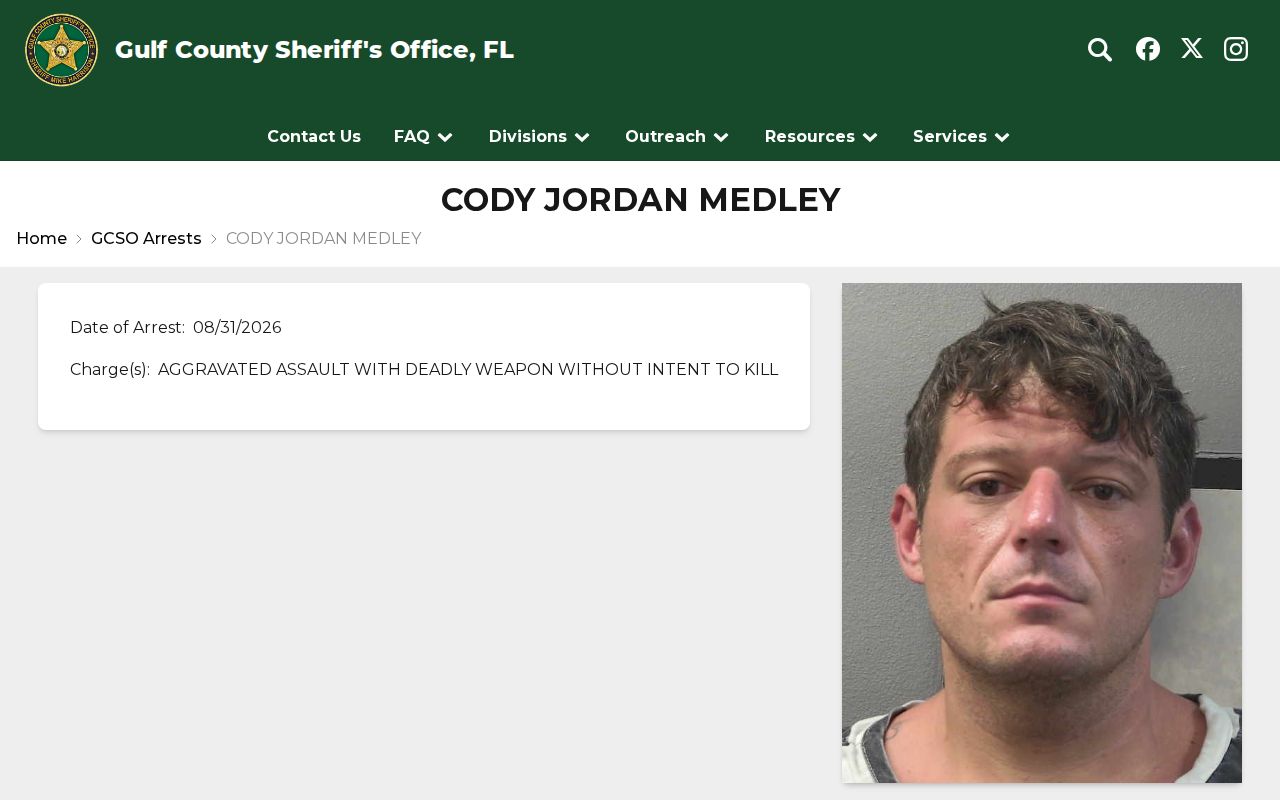
The sheriff's own detail page is shown here to explain the record's structure, not to republish anyone's booking photo.
Gulf Weekend Arrest Posting
Nothing establishes a Gulf County weekend surge or a holiday batch time. Nor is there a fixed weekly posting day. One historical Star issue listed arrest-report dates on weekdays and weekend dates alike. None were consecutive. That pattern argues for a wider date search. A single newspaper issue can't prove an agency cadence, though.
Check the arrest date first. Then scan later publication dates. A Friday, Saturday, or holiday event that never appears online warrants a call to the detention facility or records custodian. Allow for processing time first. A gap on the website is not evidence that nobody was booked.
The countywide Gulf County recent-arrests resource sorts out the division of labor. It shows how the official feed, jail contact, app, VINE, and Clerk split the work of finding one person.
Gulf Arrest Archives and Retention
The two-week photo notice is not an archive policy. Florida's GS2 schedule governs retention. Item 16 covers booking records. These may include an intake record, booking card, affidavit, arrest record, and release-on-recognizance document. Item 22 covers commitment-and-release lists. These may hold a date, booking number, name, charge, court, bond, release method, and return date. Both series keep for one anniversary year after release, subject to the schedule's conditions. Jail docket books are listed as permanent.
Those rules bind the agency, not the lifespan of a public webpage. Ask the GCSO Records Custodian whether the series you want still exists. Keep a precise date range and the person's name in hand when you call. The State Archives does not claim every local record. It holds no complete Gulf booking collection.
Archive searches should keep the source date and URL. A newspaper scan can outlive the sheriff's short web-photo window. A search engine can also keep a stale snippet after a live page changes. The reverse holds too. A missing scanned issue does not mean the agency never made a booking record. For older material, start with the UF newspaper collection. Then ask the Sheriff, detention facility, or Clerk which office holds the exact series. The University of Florida Digital Collections Star archive preserves scanned issues with date navigation.
Newspapers can surface published arrest reports. They cannot replace the agency's booking file or prove every day got covered.
VINE-Backed Gulf Arrest Reports
A May 2023 Star issue stands out as the strongest known local multi-day arrest report. Its notice credits Florida VINELink. The data came from the Gulf County Detention Facility. Entries came from both GCSO and the Port St. Joe Police Department, grouped over several nonconsecutive April arrest dates.
So a documented link exists between the newspaper report and VINE-fed detention data. That doesn't make the Star the official jail roster, and today's layout may differ. VINE exists for custody status and notifications. A newspaper decides what it prints. It also decides how long an issue stays online.
Gulf Arrest News Is Selective
The Star crime archive blends Gulf County arrests with longer reporting. Investigations, pleas, sentences, and public-safety stories sit beside booking news. WJHG's Gulf County section adds regional breaking coverage. GCSO also keeps a narrative local-news page. Those pieces can explain the location and the agencies involved. They can also cover later court action that a brief arrest post skips.
The official GCSO local news and events interface is selective too. Silence about an ordinary booking carries no evidentiary weight.
Independent sites come last. RecentlyBooked claims a 30-day Gulf window with frequent refreshes. Yet its totals and update dates shift between visits. Arrests.org offers year navigation, but its current Gulf view shows no results. Treat both as unofficial leads. Verify anything against GCSO, the jail, VINE, or the Clerk. Other commercial mugshot publishers have no verified Gulf-local page. Generic state pages do not count as county coverage.
Gulf Arrests Versus Court Outcomes
The Gulf County Clerk's record-search page links to CiviTek for anonymous public court access, subject to access rules. The Gulf County CiviTek portal is that entry point. Circuit court handles felonies. County court takes misdemeanors and criminal traffic. A docket may appear after the booking post, with entries showing later hearings and disposition.
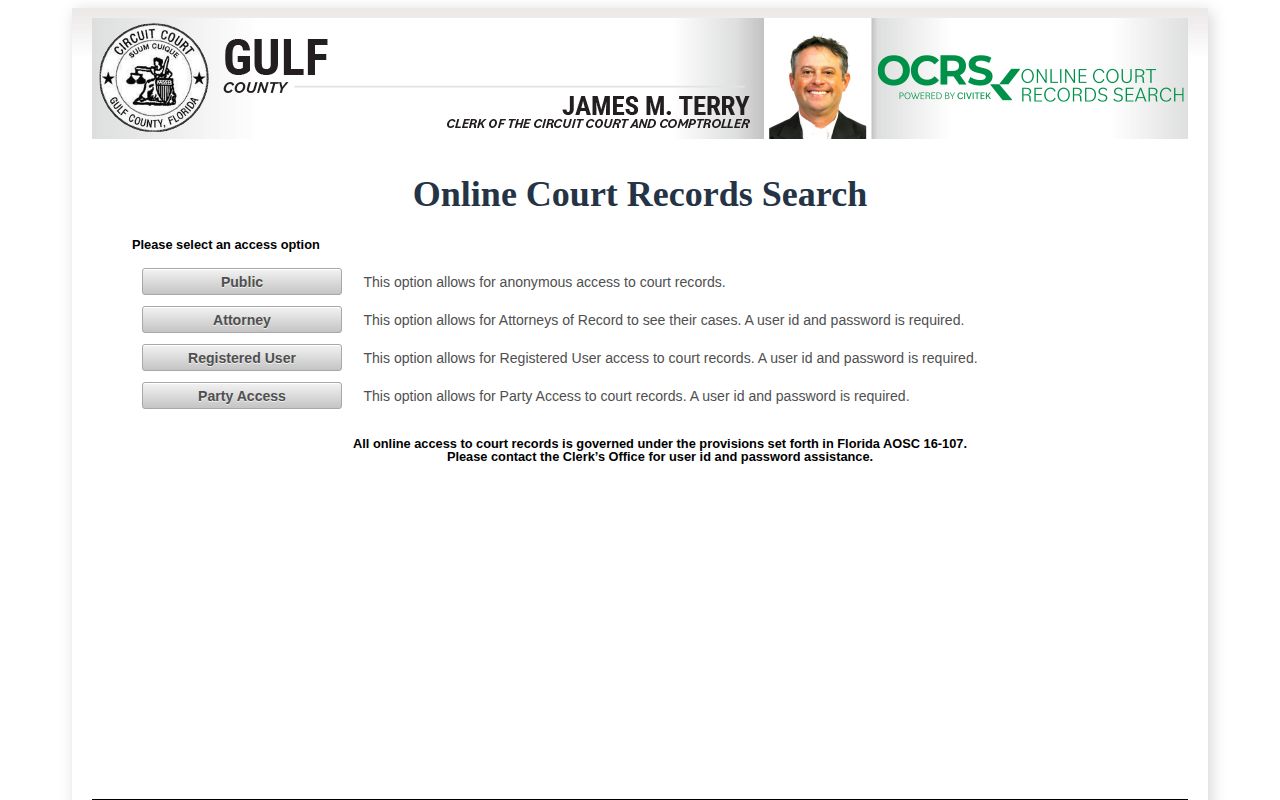
Check case identifiers and dates first. Common names trip people up. The court record is where a Gulf County case continues after the booking.
Charges can be amended, reduced, dismissed, diverted, or resolved by plea or trial. Write down the docket number once a solid match is made. It gives the Clerk a better reference than a feed screenshot. It also separates people who share a name. If no case appears, allow for filing delay. Ask the criminal division which date you searched. A missing docket does not erase the arrest event.
Public Record Search
Sponsored Results